Thread Joint for Fiberglass Pipe: What Buyers Spec Before RFQ
A thread joint on fiberglass / GRE / FRP stick pipe is a pin-and-box threaded make-up — with or without a separate coupling — that buyers freeze before RFQ so bids share the same joint family, thread form and documents.
IFGS sources GRE/FRP stick tubulars and joint kits from licensed partner factories in China and worldwide and handles spec confirmation, procurement and pre-shipment QC. IFGS has no factory of its own; it connects buyers to licensed partner factories in China and worldwide. This buyer RFQ selector is for anyone searching thread joint, fiberglass thread joint or GRE threaded connection who needs a quotable enquiry without mixing stick GRE with spoolable RTP. Start from IFGS products. No API monogram or certification is claimed here.
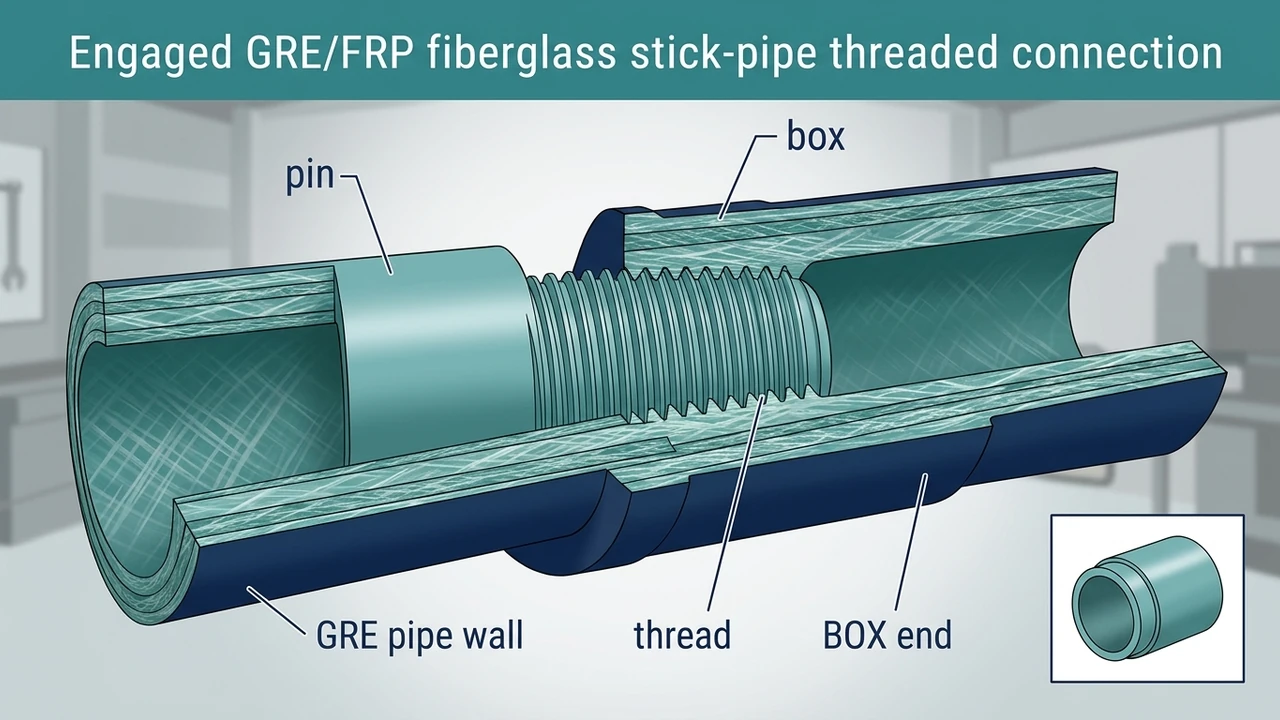
What a thread joint means on fiberglass / GRE / FRP stick pipe
On bid forms, buyers write thread joint, threaded joint, pin and box, or GRE thread connection when they mean a mechanical threaded make-up on rigid thermoset stick pipe. Male (pin) and female (box) ends engage by controlled turns or torque per the joint procedure. A separate coupling may complete the connection, or the pipe ends may thread directly. Thread joints are a GRE/FRP stick-pipe family — never label them API Spec 15S (that is spoolable RTP with end fittings).
Live product entry points: Thread Joint with Fiberglass Coupling and Thread Joint Without Coupling. Neither page publishes a free-standing datasheet as a guarantee — request the drawing, thread geometry and documents for the exact configuration offered.
Short map: with coupling | without coupling | other joint families
Lock the path before you compare bids:
- Thread + coupling. Pin/box make-up completed with a separate fiberglass (or other material) coupling sleeve. Use when the isometric prefers a coupling on the string and you need restraint without treating the joint as a push-fit seal. Product: thread joint with fiberglass coupling.
- Thread without coupling. Direct threaded joints without a separate coupling for compatible pipe ends. Submit thread geometry, sealing requirements and operating conditions for connection review. Product: thread joint without coupling.
- When to consider other families instead. Spigot / bell-and-spigot, cemented (adhesive-bonded), lamination (wrap), or double-bell coupler — link those RFQ blogs; do not rehash them here: spigot joint, cemented joint, lamination joint, double-bell coupler RFQ.
For coupling taxonomy only (adhesive vs threaded vs mechanical sleeves), use fiberglass coupling types for GRE/FRP — this page is the thread-joint RFQ, not a redo of that types guide.
Thread joint selector: what buyers must confirm
This is a qualitative comparison only. It gives no ratings.
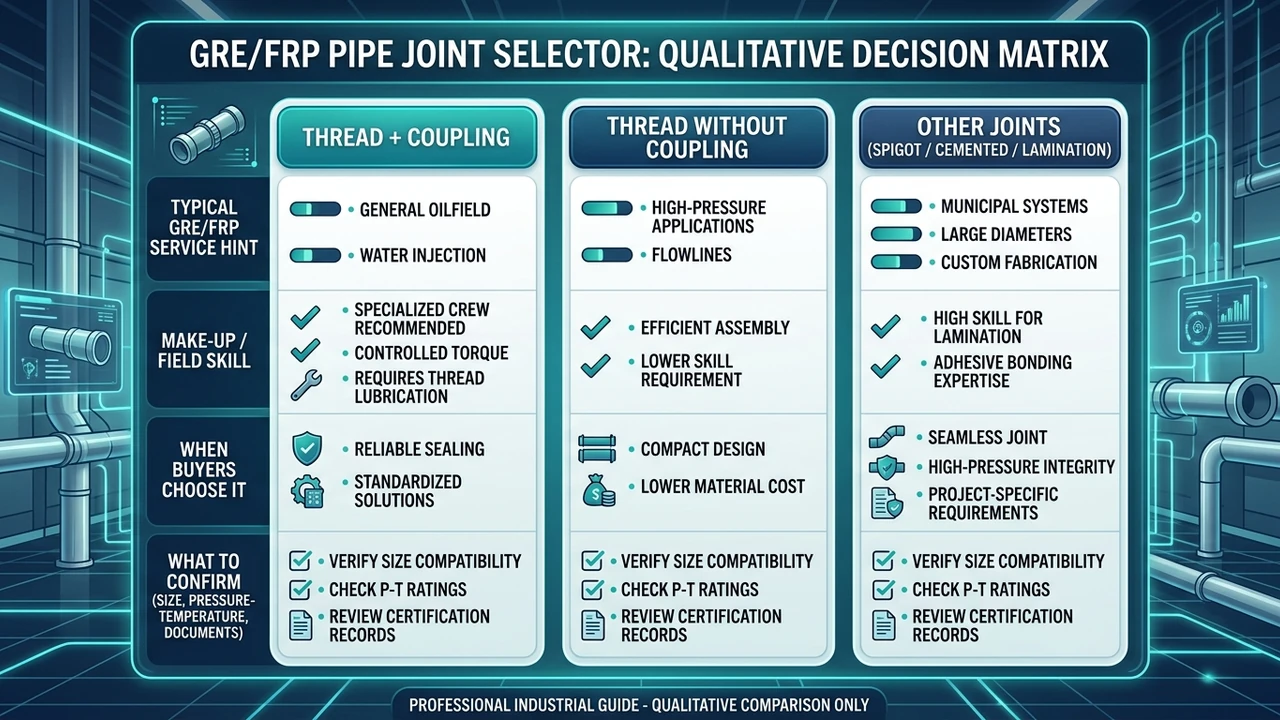
| Buyer confirm | Thread + coupling | Thread without coupling | Other (spigot / cemented / lamination / double-bell) |
|---|---|---|---|
| Typical GRE/FRP service hint | Stick string where threaded make-up and a coupling sleeve match the isometric | Compatible ends that thread directly without a separate sleeve | Push-fit seal, adhesive bond, wrap, or large-OD coupler — see linked RFQ blogs |
| Make-up / field skill | Thread make-up procedure; coupling count and spare kits on the BOM | Thread geometry and sealing requirements named on the RFQ | Seal/adhesive/wrap discipline per that family’s procedure |
| What to name before RFQ | Thread form, coupling yes, size basis, P-T, documents, make-up notes | Thread form, coupling no, size basis, P-T, documents, make-up notes | Joint family name first — do not write “thread or equal” |
Product-noun RFQs when the pipe family is still open: GRE pipe buyers guide, GRE tubing buyers guide, FRP pipe buyers guide, and the non-metallic pipe selector (GRE vs FRP vs RTP).
Spec language: stick GRE 15HR/15LR — never 15S
Thread joints live on rigid GRE/FRP stick pipe. Buyers and end users may require documents framed to API Spec 15HR or API Spec 15LR for high- or low-pressure fiberglass contexts. API Spec 15S is onshore spoolable RTP — different construction, different end fittings. 15HR ≠ 15LR ≠ 15S. Never call a fiberglass thread joint API 15S. Family selector: API 15HR vs 15LR vs 15S. A Spec number alone is not certification, and this page claims no IFGS monogram or conformance.
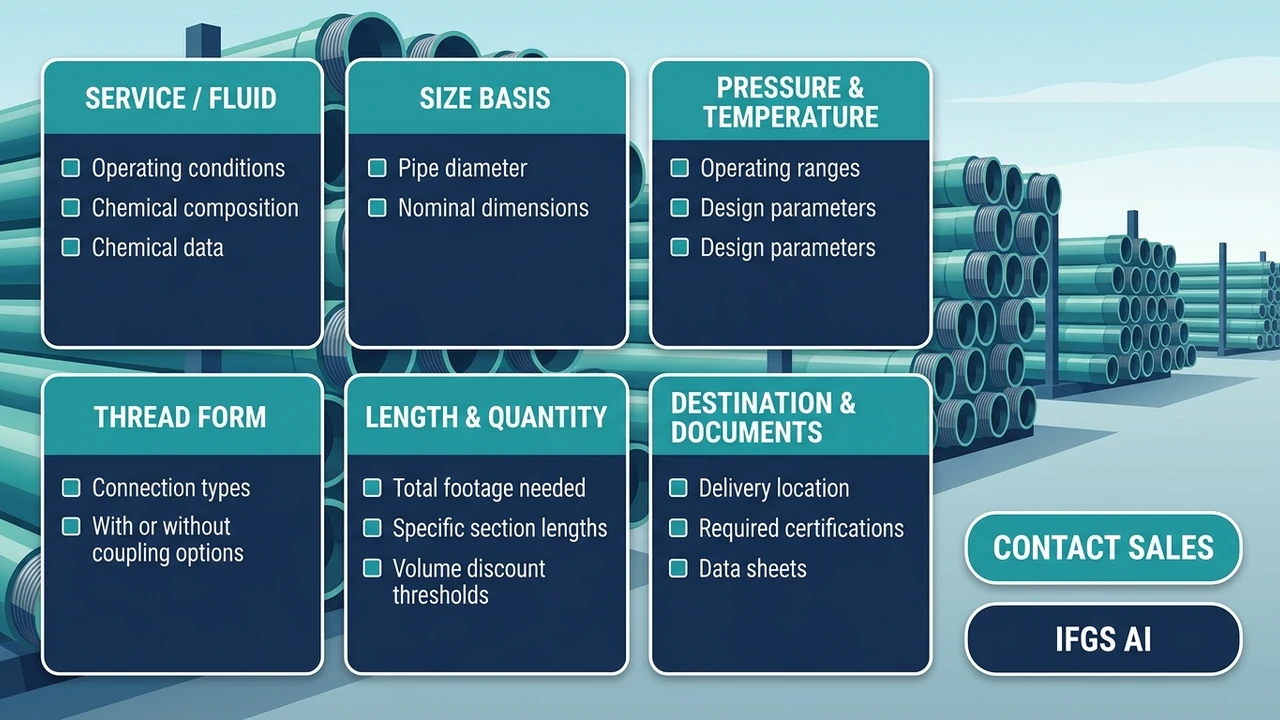
RFQ field checklist
- Service / fluid: gathering, injection, well/tubing duty, produced water, industrial or utility; include known chemistry, gas, solids and additives.
- Size basis: say whether you mean OD, ID or nominal size, and request dimensions with tolerances on one drawing.
- Operating and design pressure-temperature: internal (and external / differential if relevant), design or test basis, units.
- Thread form (with / without coupling): name pin/box preference, coupling yes or no, and any thread-form language your audit set cares about — or ask the factory to propose a matched set. Request make-up / torque or turn-count notes with the joint procedure.
- Length / quantity: total route or installed length, piece length if fixed, coupling count and spares if with-coupling.
- Destination and delivery window. Shipped from the licensed partner factory selected for your order.
- Documents required: drawing, datasheet, connection / thread information, test and inspection records. Name any API Spec your end user cites (15HR or 15LR for stick GRE/FRP — never 15S for a thread-joint string).
If thread form, coupling preference, size basis or pressure-temperature is blank, quotes will not line up. Mark unknowns “Not sure yet” and ask the factory to confirm.
How IFGS works on this order
IFGS is a sourcing and QC partner: it connects buyers to licensed partner factories in China and worldwide and handles spec confirmation, procurement and pre-shipment QC. Lock the thread-joint path (with or without coupling), service and size basis here, then confirm documents against the drawing. IFGS has no factory of its own and does not claim a monogram, and we quote no rating the catalog does not print as a confirmed datasheet. Browse IFGS products.
Next step
Contact us / request a quote
· Ask IFGS AI
· Thread Joint with Fiberglass Coupling
· Thread Joint Without Coupling
FAQ
What is a thread joint on fiberglass pipe?
A thread joint joins GRE/FRP stick pipe by threaded pin-and-box make-up — with or without a separate coupling. It is a mechanical connection on rigid thermoset sticks, not a push-fit spigot seal, not an adhesive bond, and not a spoolable RTP end fitting.
Thread joint with coupling vs without coupling?
With coupling: a separate sleeve completes the threaded connection. Without coupling: compatible pipe ends thread directly. Name which path you want (or ask the factory to propose) so bids share the same BOM. Products: with fiberglass coupling · without coupling. Coupling taxonomy only: fiberglass coupling types.
Thread vs spigot for GRE?
Thread joints use pin/box make-up and are typically chosen when the isometric prefers threaded restraint. Spigot / bell-and-spigot uses a male end in a belled socket with a seal system — different kit, different civil and install assumptions. See the spigot joint buyers guide; do not write “thread or spigot or equal” without geometry.
What does IFGS need for a quote?
Send the checklist above: service/fluid, size basis, pressure-temperature, thread form (with/without coupling), length, quantity, destination and documents. Contact sales or start with IFGS AI.