FRP Pipe (Fiberglass Reinforced Plastic): What Buyers Spec Before RFQ
FRP pipe (fiberglass reinforced plastic pipe, also called glass reinforced plastic or GRP pipe) is rigid line pipe made with glass fiber in a thermoset resin matrix—usually polyester or vinyl ester. Buyers choose it for oilfield, industrial, water or utility service, then confirm resin system, pressure-temperature basis, size and joints against the offered drawing.
IFGS sources fiberglass reinforced line pipe and related tubulars from licensed partner factories in China and worldwide and handles spec confirmation, procurement and pre-shipment QC. IFGS has no factory of its own; it connects buyers to licensed partner factories in China and worldwide. This buyer RFQ guide is for anyone searching frp pipe, fiberglass reinforced pipe, frp pipe manufacturer or grp pipe manufacturer who needs a quotable enquiry. Start from the Line pipe category. No API monogram or certification is claimed here.
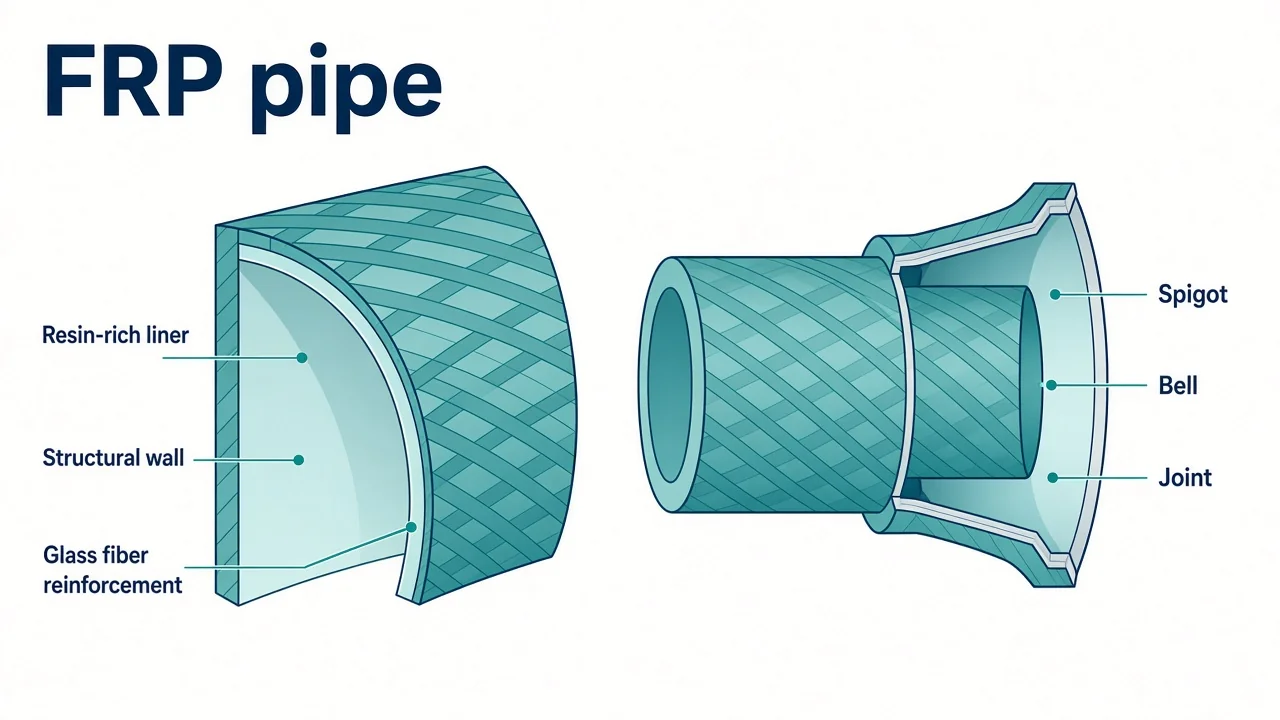
What the IFGS line-pipe pages actually publish
The line pipe category covers rigid GRE/FRP strings and asks buyers to name fluid, design pressure and temperature, dimensions, resin system and joint family, and whether the tender cites API Spec 15HR or 15LR—not spoolable 15S RTP. The two line-pipe product pages follow the same logic:
- High Pressure Fiberglass Line Pipe is “supplied as a matched pipe-and-joint system.” It asks for fluid composition, operating and design pressure, surge, temperature range, diameter, length and installation.
- Low-Pressure Fiberglass Line Pipe covers water and industrial transfer duties. It names unsaturated polyester and epoxy as base resins, so ask which resin the offered pipe uses.
Neither page publishes a datasheet; both ask you to request the size-specific rating, dimensions and documents. Catalogue range figures are references to confirm against the offered drawing, and this guide does not repeat them as ratings. For FRP oil-and-gas context see FRP technology in oil and gas.
FRP vs GRP vs GRE naming
Searchers asking what is frp pipe or frp pipe meaning often land on three labels. FRP means fiberglass reinforced plastic. GRP means glass reinforced plastic—the same idea in many water and industrial specs. GRE means glass reinforced epoxy. If your tender says “FRP” or “GRP,” still name the resin on the datasheet. Background: What is GRP pipes? and Benefits of using fiberglass pipes (FRP pipes).
FRP/GRP pipe vs GRE pipe vs lined steel vs RTP
This is a qualitative comparison only. It gives no ratings.
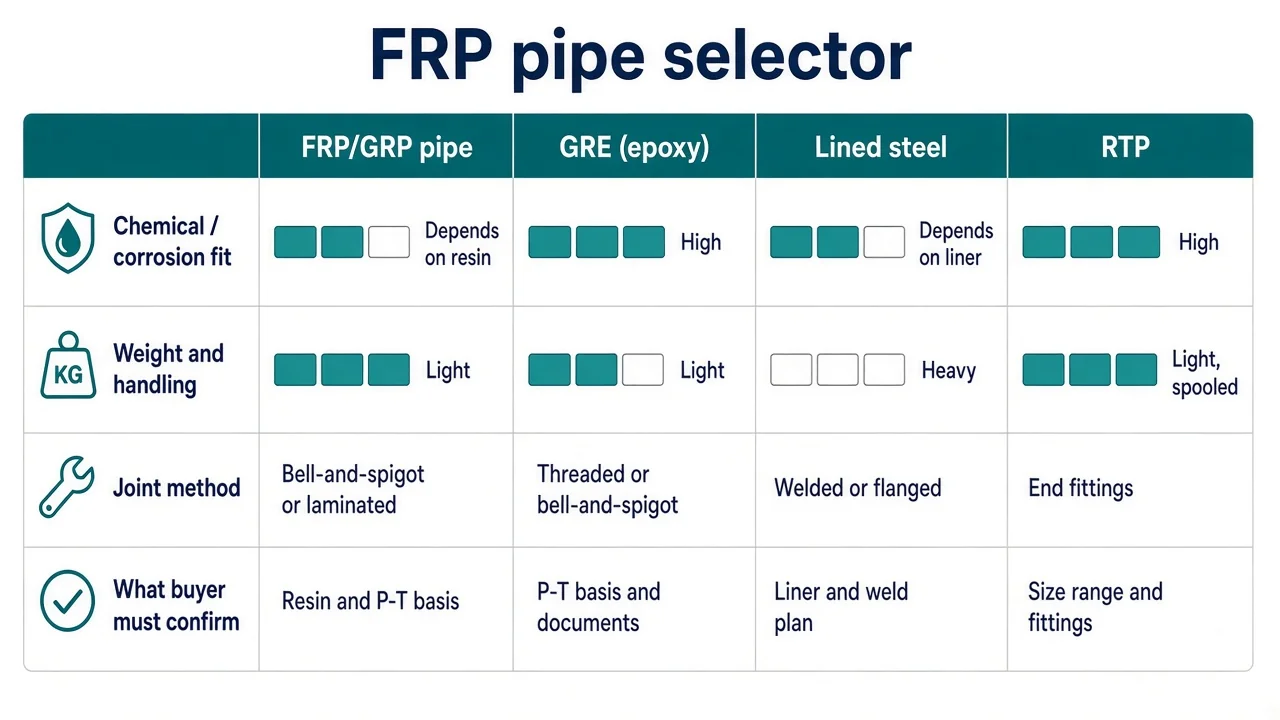
- FRP/GRP pipe. Glass fiber in polyester or vinyl ester. Common in water, utility and industrial transfer. Name the resin in the RFQ rather than writing “FRP or equal.”
- GRE pipe. Glass fiber in an epoxy matrix. Often chosen for corrosive produced water, injection water and chemical service. Confirm pressure-temperature basis, joint system and documents for the exact size. See the GRE pipe buyers guide.
- Carbon or lined steel. Familiar welding and installer practice, but heavy, and corrosion resistance depends on the liner surviving at welds and field joints. Confirm liner and weld plan.
- RTP. Reinforced thermoplastic pipe is spoolable, reeled and uses end fittings: a different family. Keep it out of a rigid FRP pipe RFQ. The non-metallic pipe selector covers the class choice.
Joint system, fittings and flanges
FRP line pipe is a pipe-and-joint system, so the joint is part of the specification. Name the joint family you expect, or ask the factory to propose one, then read the matching guide:
- Spigot joint buyers guide
- Lamination joint buyers guide
- Cemented joint buyers guide
- Fiberglass coupling types for GRE/FRP pipe
- Double bell coupler joint RFQ
Elbows, tees, reducers and flanges need their own list with sizes, angles and mating flange standard. Use the fiberglass fittings RFQ checklist so the fittings match the pipe family and joint.
API 15HR vs 15LR: which documents to ask for
API Spec 15HR is titled High Pressure Fiberglass Line Pipe, and 15LR covers low-pressure fiberglass line pipe. If your tender cites either, say which one and ask the supplier for the documents that go with the offered size and joint. As the IFGS high-pressure page notes, a reference to the standard is not proof of certification for a particular product. Never call FRP or GRE line pipe API 15S, because that is spoolable RTP. This page does not claim IFGS conformance, a monogram or any certification. For background see API 15HR vs API 15LR and the API 15HR / 15LR GRE tubing RFQ.
Qualifying FRP pipe manufacturers
A search for frp pipe manufacturer, frp pipe manufacturers, fiberglass reinforced pipe manufacturer, frp pipe supplier or grp pipe manufacturer should end with a document list, not a logo check. Ask every shortlisted factory (IFGS requests this from its partner factory) for:
- A dimensioned drawing and a datasheet for the specific size and joint offered, not a generic brochure.
- The resin system and the pressure-temperature basis that apply to the offer.
- Hydrotest and inspection documents, plus any standard edition your project names.
- The joint detail, seals and installation instructions.
- The packing method and delivery destination from the manufacturing site.
For plant QA questions use the fiberglass pipe manufacturers buyer checklist. For finding a plant fit, see Finding the right FRP pipe manufacturer.
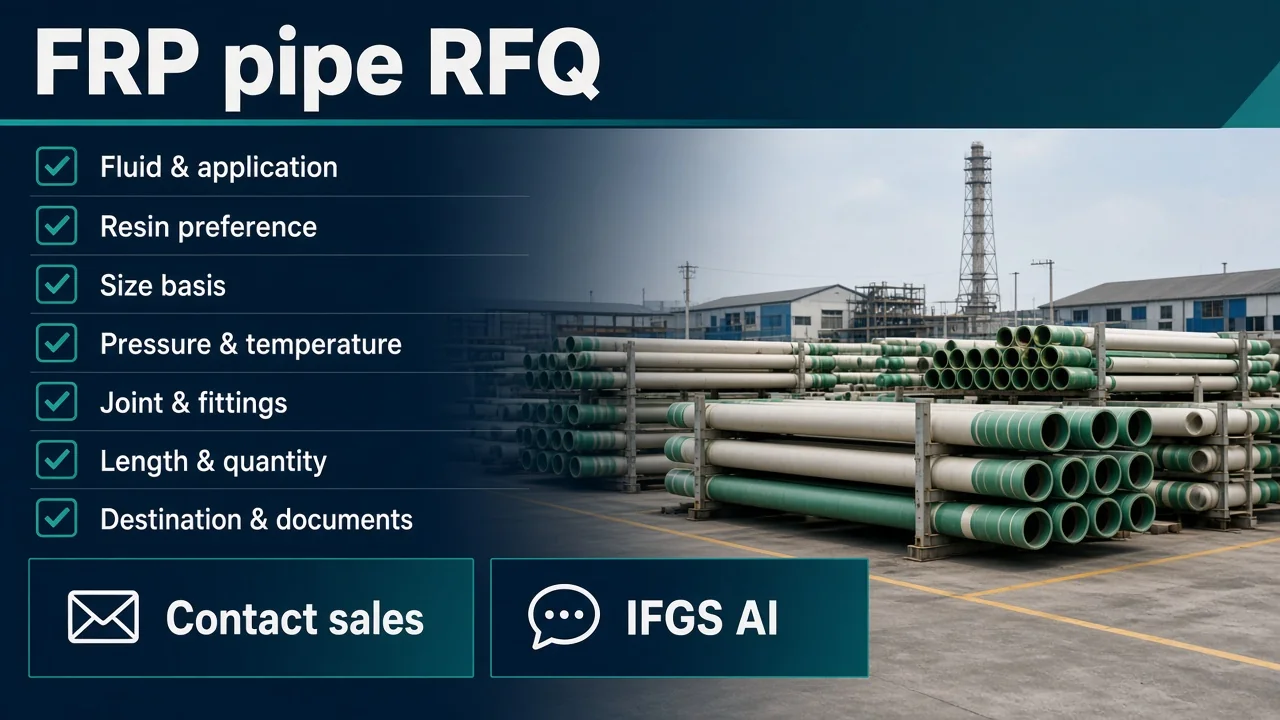
RFQ field checklist
- Application and fluid: oilfield, industrial, water or utility service.
- Resin preference: polyester, vinyl ester, epoxy or “not sure yet”—ask the factory to confirm suitability.
- Size basis: say whether you mean nominal diameter or OD, and request dimensions with tolerances on one drawing.
- Operating and design pressure: internal and external, surge conditions, design or test basis, and units.
- Temperature: operating and design, with units.
- Joint type: preferred joint family, or ask the factory to propose one, with seal and installation notes.
- Fittings and flanges: a list with sizes, angles and mating flange standard.
- Installation: buried or above-ground, supports, external loading, thrust restraint.
- Length and quantity: total route length, piece length if fixed, spares.
- Destination and delivery window. Shipped from the licensed partner factory selected for your order.
- Documents required: drawing, datasheet, joint information, test and inspection records. Name any API Spec your end user cites.
If size basis, pressure-temperature conditions or joint type is blank, quotes will not line up. Mark unknowns “Not sure yet” and ask the factory to confirm.
How IFGS works on this order
IFGS is a sourcing and QC partner: it connects buyers to licensed partner factories in China and worldwide and handles spec confirmation, procurement and pre-shipment QC. Set the pipe family, resin, service and joint here, then confirm documents against the drawing. IFGS has no factory of its own and does not claim a monogram, and we quote no rating the catalog does not print as a confirmed datasheet. Browse IFGS products.
Next step
Contact us / request a quote
· Ask IFGS AI
· High Pressure Fiberglass Line Pipe
· Low-Pressure Fiberglass Line Pipe
FAQ
What is FRP pipe?
FRP pipe is fiberglass reinforced plastic line pipe: glass fiber in a thermoset resin. Buyers also say GRP pipe. Confirm the resin system and the offered drawing before you treat any catalogue figure as a rating.
FRP vs GRE vs GRP: which do I need?
FRP and GRP usually mean polyester or vinyl ester composites; GRE means epoxy. Name the resin on the datasheet, and use the GRE pipe buyers guide when epoxy is required.
Which API spec do I ask for?
Whatever your end user’s tender cites, usually API Spec 15HR or 15LR for fiberglass line pipe. Never 15S—that is spoolable RTP. Ask for the documents for the offered size and joint.
What does IFGS need for a quote?
Send the checklist above: fluid, resin preference, size basis, pressure, temperature, joint type, fittings, installation, length, quantity, destination and documents. Contact sales or start with IFGS AI.