Non-Metallic Pipe in Oil & Gas: When GRE, FRP, or RTP Fits
Non metallic pipe in oil and gas means GRE, FRP, or RTP lines that move fluids without steel corrosion risk — chosen by pressure, temperature, fluid, and stick joints versus a spoolable reel. Pick the family before you freeze the RFQ.
IFGS sources GRE / FRP / RTP oilfield equipment from licensed partner factories in China and worldwide and handles spec confirmation, procurement and pre-shipment QC. IFGS has no factory of its own; it connects buyers to licensed partner factories in China and worldwide. This page is a buyer selector for non-metallic pipe families. It does not redo the Saudi Aramco nonmetallic deployment news post, and it stays off UL 1316 / UL 58 / UL 1746 tank clusters. No fake certificate or monogram claims here.
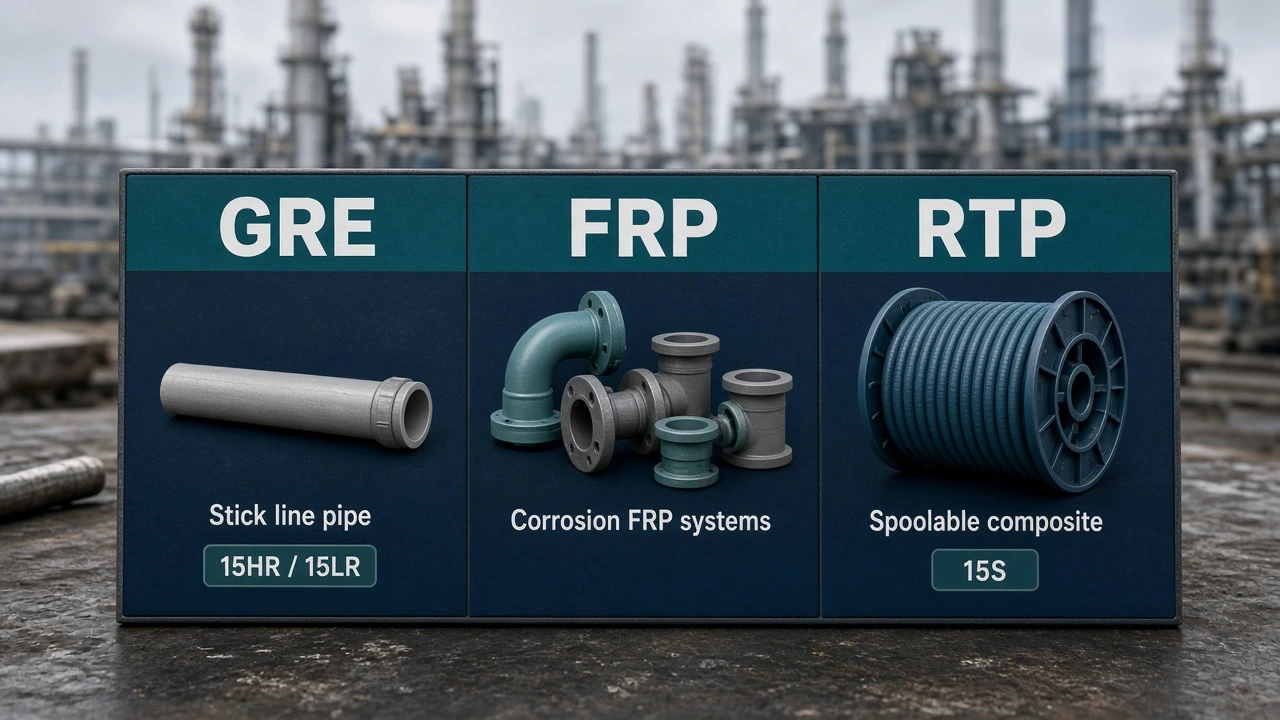
Three-path selector: GRE vs FRP vs RTP
Buyers often write “non-metallic” or “composite” on one line and get three unequal quotes. Freeze the path first:
- GRE (glass-reinforced epoxy) — stick line pipe and related oilfield GRE systems for corrosive service where epoxy resin, glass reinforcement, and jointed stick lengths fit the lay plan. Typical buyer language sits with API Spec 15HR / 15LR for stick GRE — not with spoolable 15S reels. See also GRE tubing vs GRE pipe and spigot-joint fiberglass pipe.
- FRP (fiberglass-reinforced plastic / polyester or vinyl-ester families) — corrosion-resistant FRP pipe and systems where the resin system, liner, and joint type match chemistry and temperature more than spool speed. Couplings and stick joints stay in the FRP/GRE stick world — see fiberglass coupling types (GRE/FRP). Qualify plants with the fiberglass pipe manufacturers buyer checklist.
- RTP (reinforced thermoplastic / spoolable composite) — reel-delivered pipe for pads and corridors where continuous length, bend radius, and end fittings matter more than stick joint count. Tender language stays on API Spec 15S only. Spec fittings with the reel — RTP pipe fittings buyers guide — and qualify the plant separately — RTP manufacturers qualification guide.
Rule of thumb: if the install plan is stick joints and spools of fixed length, start GRE/FRP. If the install plan is a reel, unspool, and end fittings, start RTP. Do not mix families on one RFQ line.
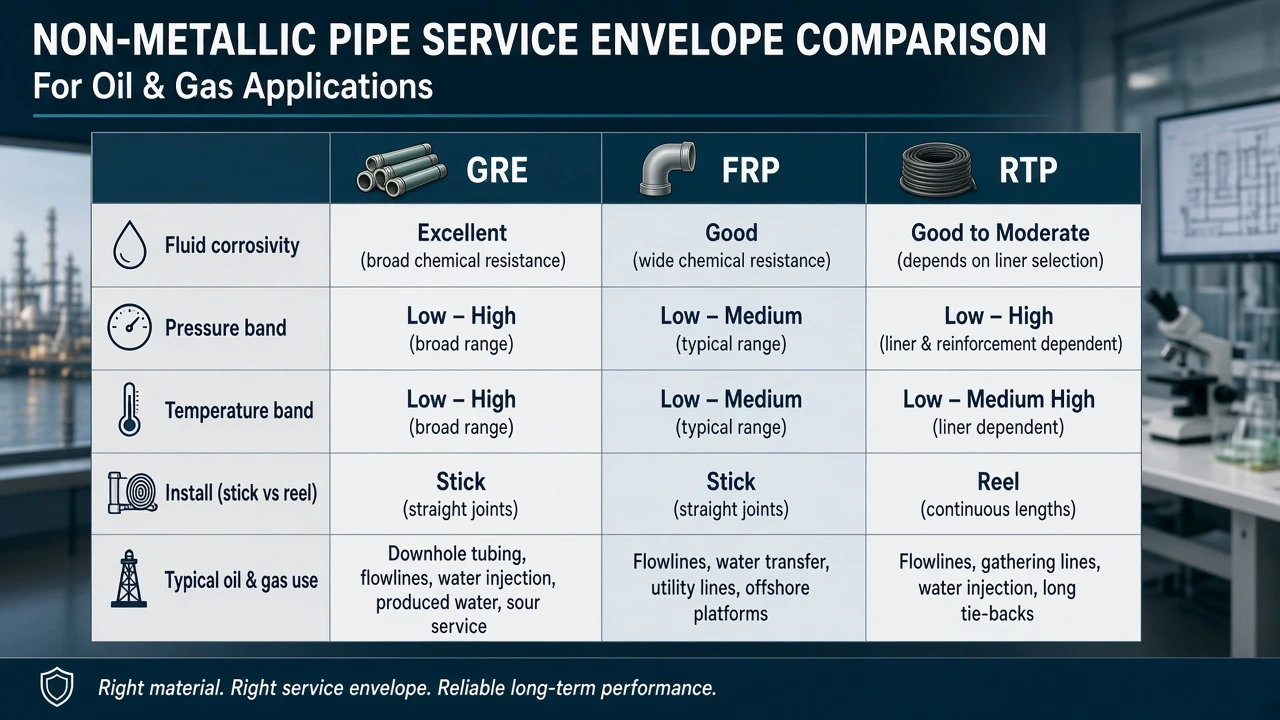
Corrosion and service envelope (honest scope)
Use the table art as a conversation board, not as invented plant ratings. On IFGS RFQs we ask buyers to fill project fields — we do not stamp fake pressure or certificate numbers as factory claims.
- Fluid corrosivity — produced water, injection water, oil, multiphase, gas; note H₂S, CO₂, chlorides, aromatics if known. GRE/FRP stick systems often win where steel corrosion drives OPEX; RTP wins where continuous length and corrosion resistance both matter and the reel plan fits.
- Pressure band — design / operating / test as project numbers on the sheet. Stick GRE and spoolable RTP cover different construction envelopes; never paste a 15S reel class onto a 15HR stick line (or the reverse).
- Temperature band — continuous and upset; resin and liner choice matter as much as reinforcement. Cold pad install vs hot fluid both belong on the RFQ.
- Install — stick jointed GRE/FRP (crane, trench, joint make-up) vs spoolable RTP (reel, MBR, end fittings). Buried vs surface vs mixed changes handling and test scope.
- Typical oil & gas use — gathering, injection, flowlines, water disposal, and similar onshore services when the family matches fluid and install. Offshore or specialty scopes need their own datasheet — do not assume this selector covers every riser or subsea case.
How IFGS works on this order: IFGS quotes GRE, FRP, and RTP oilfield equipment from the licensed partner factory selected for the order. We will say what we can document; we will not invent monograms, USA-factory claims, or acceptance numbers you did not put on the RFQ.
Spec language: do not mix API families
Keep tender and quote language clean:
- Stick GRE — often API Spec 15HR (high pressure) or 15LR (low pressure) language for fiberglass line pipe. Couplings and spigot joints stay in that stick world.
- Spoolable RTP — API Spec 15S for reinforced thermoplastic / flexible composite pipe. End fittings and mid-line joints stay with the reel construction.
Never label an RTP reel as 15HR/15LR, and never paste stick GRE couplings into a 15S fittings RFQ. Treat website “API” adjectives as marketing until the quote pack names construction, tests, and documents you will buy.
RFQ field checklist
- Product family — GRE stick, FRP stick system, or spoolable RTP (one family per line item).
- Standards frame — API Spec 15HR / 15LR for stick GRE when that is your tender language; API Spec 15S for spoolable RTP. Do not mix.
- OD / ID or size class and design / operating / test pressure as project fields.
- Temperature — continuous and upset.
- Fluid / medium and corrosives (H₂S / CO₂ / chlorides / aromatics if known).
- Install method — stick jointed vs reel; buried / surface / mixed; crane or trailer limits.
- Joints / fittings — for GRE/FRP: coupling or spigot type and qty; for RTP: end fittings, mid-line couplers, terminations with the reel (see RTP fittings guide).
- Lengths / reels — stick piece length or reel length / MBR; spare kits and seals.
- QA documents — datasheet, ITP outline, install / make-up procedure, material / traceability as required.
- Logistics — destination, packing (crates vs reels), unload notes.
If family or standards frame is blank, quotes will diverge on joints and lead time before meter price does.
How IFGS works on this order
IFGS is a sourcing and QC partner for GRE / FRP / RTP oilfield equipment: it connects buyers to licensed partner factories in China and worldwide and handles spec confirmation, procurement and pre-shipment QC. Use this selector to lock the family; use the manufacturer checklists and fittings guides linked above to lock the plant and the joints. IFGS has no factory of its own and will not invent certificates. Product hub when you are ready to browse families: IFGS products.
Next step
Contact us / request documents
· IFGS AI
· Products
· Fiberglass manufacturers checklist
· RTP qualification guide
FAQ
What is non metallic pipe in oil and gas?
Non metallic pipe usually means GRE, FRP, or RTP (and related composites) used instead of steel where corrosion, weight, or install method favor a non-metal construction. Name the family on the RFQ — do not leave “non-metallic” alone.
When should I choose RTP instead of GRE or FRP?
Choose RTP when the install plan is spoolable (reel, continuous length, end fittings) and tender language is API Spec 15S. Choose GRE/FRP stick when jointed stick lengths and 15HR/15LR (or FRP system) language fit better. Pressure, temperature, and fluid still decide the envelope inside each family.
Can I put API 15S and 15HR on the same RFQ line?
No. Stick GRE often uses 15HR / 15LR; spoolable RTP uses 15S. Mixing families produces unequal bids and wrong fittings.
Does IFGS have its own factory?
No. Shipped from the licensed partner factory selected for your order.