When your RFQ asks for RTP pipe—or a matched reinforced thermoplastic pipe-and-fitting configuration—you still need fluid, pressure-temperature conditions, dimensions and route, installation notes, and end fittings before a quote can land. You mark undecided fields “Not sure yet,” request the product datasheet for the offered configuration, and treat general industry RTP examples as non-binding. This page is a commercial project RFQ/spec checklist—not an RTP definition encyclopedia and not a manufacturers qualification guide.
What RTP means on your project RFQ
On the live IFGS product page, reinforced thermoplastic pipe is framed for project-specific fluid transfer. You define the fluid, pressure, temperature, pipe dimensions, and end connections so a matched pipe-and-fitting configuration can be selected. RTP combines a thermoplastic pipe construction with reinforcement; for procurement, you select the offered construction and its end fittings against your project conditions.
A technical datasheet is not published on the product page. You ask for the applicable dimensions, ratings, and supporting documents for your project. For your primary quote path, open Reinforced Thermoplastic Pipe.
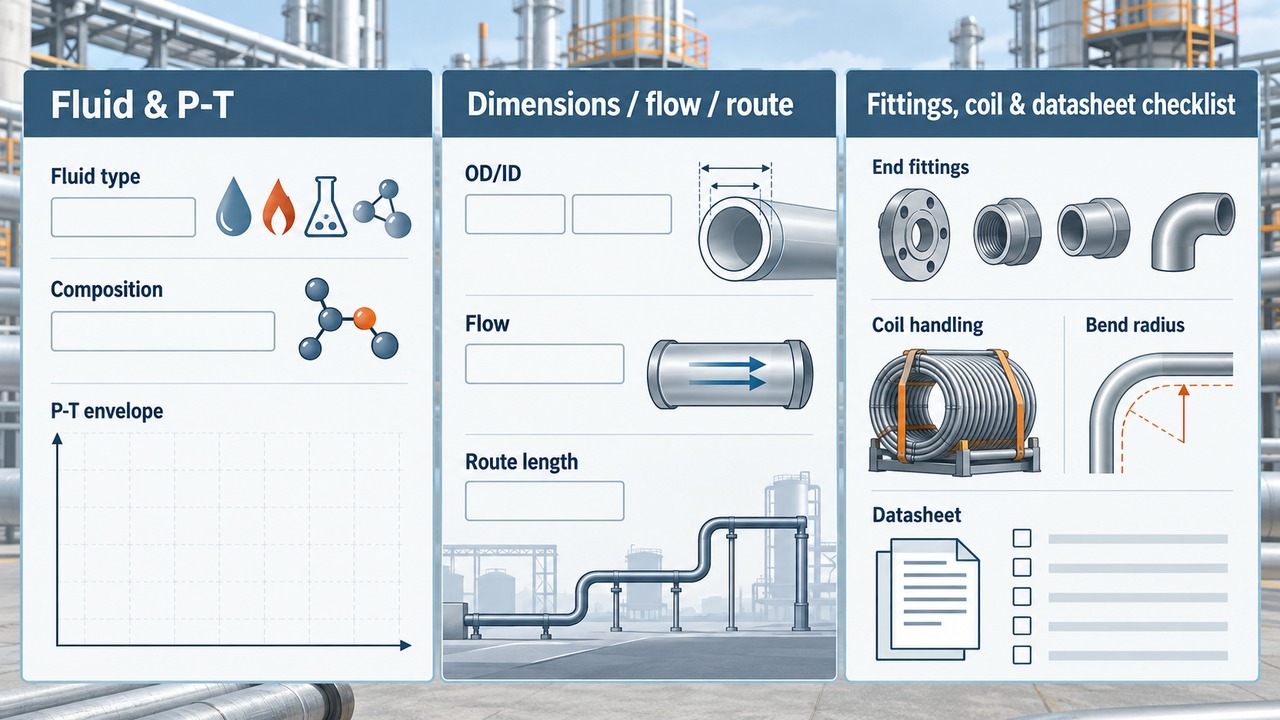
Spec decisions your RFQ should name
Use this table when you shortlist RTP on fluid, P-T, dimensions, installation, end fittings, and documents:
| Decision factor on your project | What IFGS publishes (reference) | What you should put in your RFQ |
|---|---|---|
| Product path | Reinforced thermoplastic pipe for project-specific fluid transfer | Name RTP / reinforced thermoplastic pipe—not a generic “non-metallic” ask only |
| Fluid and composition | Include known gas, solids and chemical additives | Fluid notes + composition; mark gaps “Not sure yet” |
| Pressure and temperature | Operating and design conditions, with units; fluctuations or surge if known | Operating/design P-T + surge notes with units |
| Dimensions, flow and route | Pipe size, flow and proposed installation route | Diameter/flow/length/layout as known |
| Installation and handling | Above-ground or buried; site access and delivery constraints | Installation mode + access/delivery notes |
| End fittings and materials | Equipment interfaces, drawings; liner, reinforcement or cover | Interfaces/drawings + material notes or service info to select them |
| Define the system | Fluid/P/T/surge; diameter/flow/length/layout; liner/reinforcement/cover; connection to existing pipework; standards/inspection/delivery/quantity | Cover each bullet you can; leave the rest “Not sure yet” |
| Coiled supply (if proposed) | Confirm coil dimensions, handling, allowable bend radius with supplier | Ask coil dims, handling, bend radius explicitly |
| Datasheet status | No technical datasheet published on the product page | Request P-T rating, material compatibility, dimensions, end-fitting details, installation limits |
| Documents | Datasheet, connection info, qualification docs; team confirms availability/version | Ask by name; include quantity, destination, delivery window |
When your inquiry may fit a high-pressure fiberglass line-pipe family instead of RTP, review High Pressure Fiberglass Line Pipe. Treat RTP industry examples as non-binding—use the proposed product datasheet and your project requirements for final selection.
RFQ checklist: what you should send so the quote matches your duty
Before you request a quotation, include these items:
- Named product path — reinforced thermoplastic pipe (RTP) — project RFQ path, not a definition blog ask and not a manufacturers qualify ask.
- Fluid and composition — known gas, solids, and chemical additives; mark undecided fields “Not sure yet.”
- Pressure and temperature — operating and design conditions with units, including fluctuations or surge if known.
- Dimensions, flow, and route length — pipe size, flow, and proposed installation route/layout.
- Installation and handling — above-ground or buried, site access, and delivery constraints.
- End fittings and material requirements — equipment interfaces, drawings, and any specified liner, reinforcement, or cover (or the service information needed to select them).
- Connection to existing pipework — valves, equipment, and interface notes.
- Coiled supply checks (if proposed) — coil dimensions, handling requirements, and allowable bend radius.
- Quantity, delivery destination, and delivery window for an IFGS quotation.
- Technical documents by name — product datasheet (P-T rating, material compatibility, dimensions, end-fitting details, installation limits), connection information, and qualification documents; the team confirms availability and version.
Mark undecided fields as “Not sure yet”—partial information is enough to start. General RTP industry examples do not define the performance or supply format of a particular IFGS configuration. If your tender mixes RTP with high-pressure fiberglass line pipe or other non-metallic families, split the RFQ—different document packs apply.
Where RTP fits on your transfer scope
You shortlist Reinforced Thermoplastic Pipe when your inquiry is a project-specific fluid-transfer line and you can define fluid, P-T, dimensions/route, installation, and end fittings well enough for a technical review. You open High Pressure Fiberglass Line Pipe when you need a matched pipe-and-joint fiberglass line-pipe family instead of RTP. You keep this URL as a commercial project RFQ/spec checklist, not as a substitute for the live reinforced-thermoplastic-pipe definition blog or the RTP manufacturers qualification guide. When you need documents, you request the applicable datasheet and supporting files—the team confirms availability and version.
Spec traps that slow your quote
You should watch for these gaps—they usually return clarifying questions instead of numbers:
- You named RTP without fluid composition (gas, solids, additives) or with empty P-T fields.
- You sent pressure only without temperature, surge, or units.
- You skipped pipe size, flow, route length, or installation mode (above-ground vs buried).
- You asked for a quote without end-fitting interfaces or drawings, and without liner/reinforcement/cover notes or service info to select them.
- You assumed coiled supply without confirming coil dimensions, handling, and allowable bend radius.
- You treated general industry RTP examples as IFGS configuration limits.
- You asked for a CE / ISO / API seal IFGS did not publish on the live product body for your project.
- You asked for price only and skipped the datasheet request, quantity, destination, and delivery window.
Clean those gaps—your inquiry is ready.
FAQ
What should you define before IFGS can review your RTP RFQ?
You should define fluid composition, operating and design pressure, temperature range, and expected surge conditions; required diameter, flow rate, length schedule, and installation layout; liner, reinforcement, and outer-cover materials—or the service information needed to select them; connection to existing pipework, valves, and equipment; plus standards, inspection records, delivery destination, and quantity. Partial information is enough to start. Mark undecided fields “Not sure yet” so technical review can begin without guessing.
Is a technical datasheet published on the RTP product page?
No. A technical datasheet is not published on the live Reinforced Thermoplastic Pipe page. You request the applicable dimensions, ratings, and supporting documents for your project. Ask for pressure-temperature rating, material compatibility, dimensions, end-fitting details, and installation limits of the offered product. The IFGS team confirms document availability and the applicable version.
What fluid and pressure-temperature details should you send?
You should include known gas, solids, and chemical additives with your fluid notes. State operating and design pressure and temperature with units, and include fluctuations or surge if known. Catalogue language alone is not a substitute for a duty-specific envelope. Pair those notes with dimensions and route so IFGS can review the offered construction against your conditions.
What end-fitting and material information should you attach?
You should share equipment interfaces, drawings, and any specified liner, reinforcement, or cover requirements. If materials are still open, send the service information needed to select them and mark the field “Not sure yet.” Connection to existing pipework, valves, and equipment belongs in the same package. Request end-fitting details with the product datasheet by name.
What should you confirm if coiled RTP supply is proposed?
Where coiled supply is proposed, you confirm coil dimensions, handling requirements, and the allowable bend radius with the supplier. Those checks sit beside installation and delivery constraints—above-ground or buried, site access, and delivery notes. Do not assume coil format from a general industry example. Ask for those limits on the offered configuration’s datasheet and supporting documents.
Why do general RTP industry examples not define your IFGS configuration?
IFGS states that general RTP industry examples do not define the performance or supply format of a particular IFGS configuration. You use the proposed product datasheet and your project requirements for final selection. That keeps your quote tied to verified fields—fluid, P-T, dimensions, fittings, and installation limits—not borrowed catalogue folklore. Request the documents by name so version and availability are confirmed.
What should you attach when you ask IFGS for an RTP quotation?
You should attach fluid and composition notes; operating/design P-T with units and surge if known; dimensions, flow, and route; installation and handling; end fittings and material or service notes; connection to existing pipework; plus quantity, destination, and delivery window. If coiled supply is proposed, add coil dimensions, handling, and bend radius. Ask for the product datasheet, connection information, and qualification documents by name—partial information is enough; mark gaps “Not sure yet.”
When your checklist is complete, open the Reinforced Thermoplastic Pipe page linked above (or High Pressure Fiberglass Line Pipe when your duty fits that family), request the product datasheet and supporting documents for the duty that matches your line, and send IFGS your fluid, P-T, dimensions, installation, fittings, quantity, and delivery window. That package lets your RTP quote rest on verified project fields—not guesswork.