Iraqi oil and gas developments often combine corrosive produced fluids, high water cut, saline formation water, and tight construction windows for gathering and flowline tie-ins. That mix is why non-metallic line options — especially spoolable reinforced thermoplastic pipe (RTP) written against API Spec 15S — keep showing up in buyer shortlists.
This page is a buyer-facing map of why that interest exists and what to put in an RFQ. It is not a claim that IFGS has won a named Iraq project, and it does not invent certificates, logos, or field case studies.
IFGS manufactures GRE / FRP / RTP oilfield equipment in Dongying, China. Confirm design data, qualification documents, and joint hardware against your project specification before purchase.
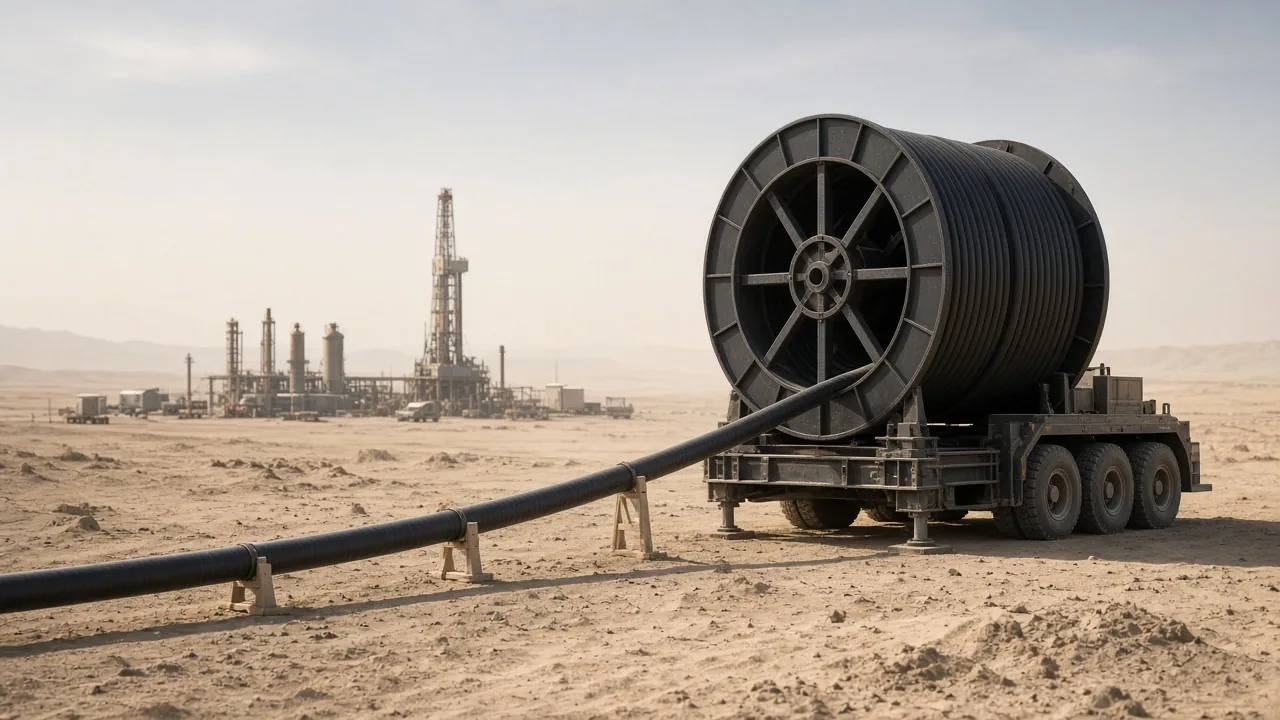
What “API 15 RTP” means in RFQ language
In many tenders and chat messages, people write “API 15 RTP.” In precise RFQ language that almost always means:
> API Spec 15S — spoolable composite / reinforced thermoplastic line-pipe systems (pipe + joints + reeling / installation assumptions as defined by the buyer and manufacturer documentation).
Do not confuse that path with:
| Shorthand buyers say | Standard path | Product family |
|---|---|---|
| API 15 RTP / spoolable composite | API Spec 15S | RTP systems |
| API 15HR / high-pressure GRE | API Spec 15HR | GRE fiberglass tubulars |
| API 15LR / low-pressure GRE | API Spec 15LR | GRE fiberglass tubulars |
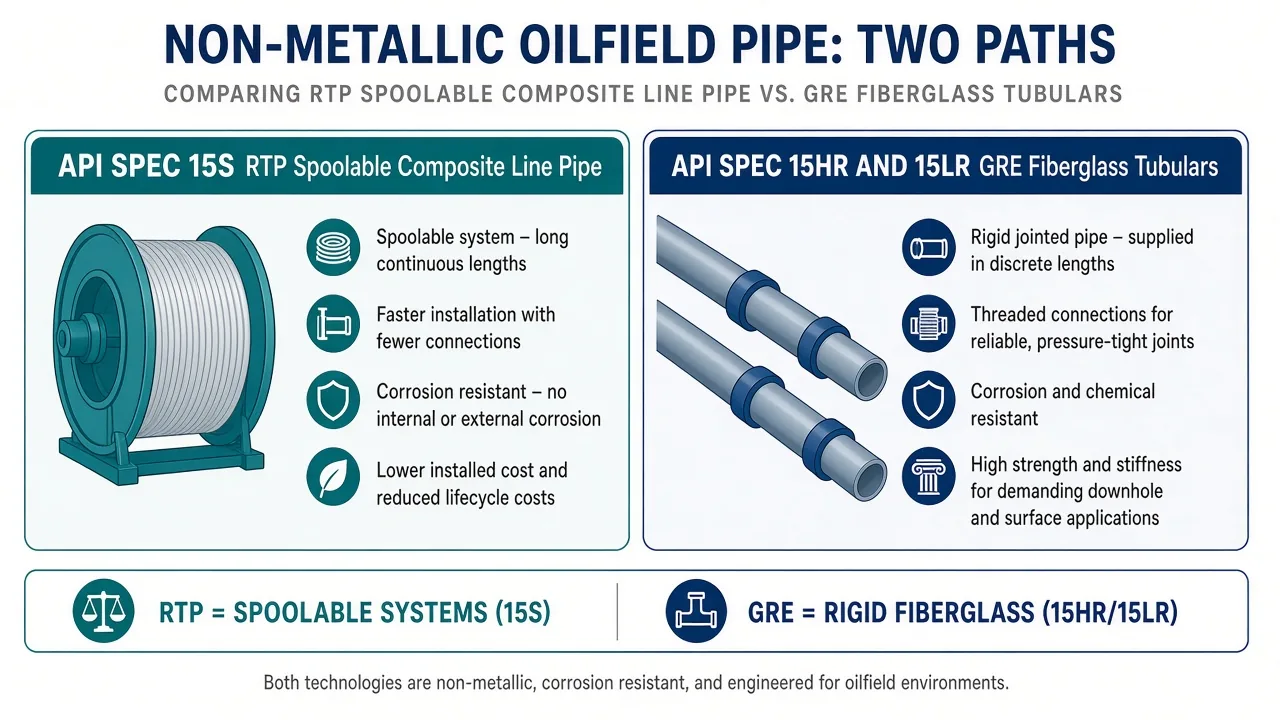
Mixing 15S with 15HR/15LR is one of the fastest ways to get unequal bids and the wrong joint hardware.
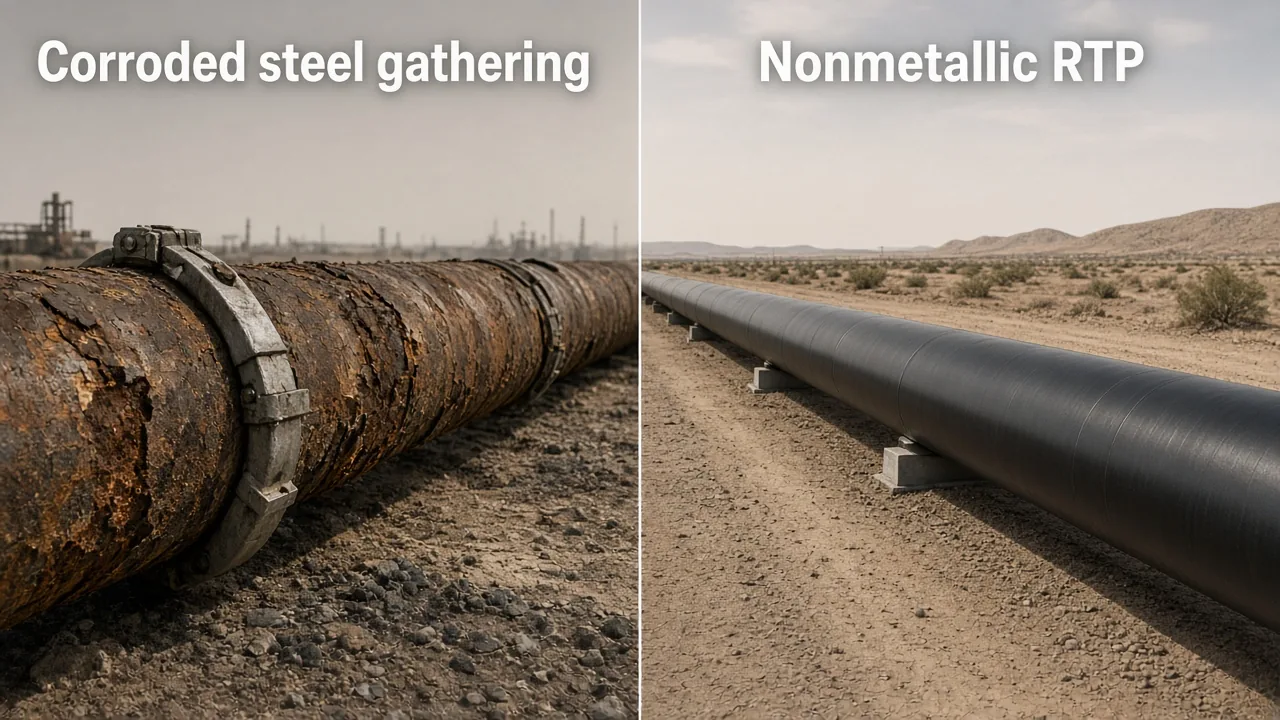
Why operators look at RTP in Iraq-type conditions
Operators evaluating RTP for Iraq-like surface and gathering service are usually optimizing for integrity + schedule, not for a brochure adjective. Typical engineering drivers (honest, general — not a named-field win list):
- Corrosion resistance in aggressive fluids
Produced water, saline aquifers, and streams with H₂S / CO₂ punish bare carbon steel. A non-metallic bore can reduce internal corrosion risk when the fluid, temperature, and permeation assumptions match the product design. RTP is not “immune to every chemistry”; it is a materials path that must be checked against the fluid data sheet.
- Lighter logistics than jointed steel
Reels and long continuous lengths change trucking, crane picks, and string-out plans versus stick steel. On congested pads and remote desert corridors, weight and joint count often matter as much as metallurgy.
- Faster install / fewer field welds
Spoolable install can cut weld count, NDE load, and tie-in time for certain gathering and injection lines — if the route, bend radius, burial/cover, and joint kit are designed for reeling. Speed is a project outcome, not a guarantee printed on the reel.
- Water-cut and brownfield reality
Rising water cut and workover-driven reroutes create demand for corrosion-tolerant jumpers and short-to-medium gathering lines that can be mobilized quickly. RTP is one option in that toolbox alongside lined steel, GRE, and other composites.
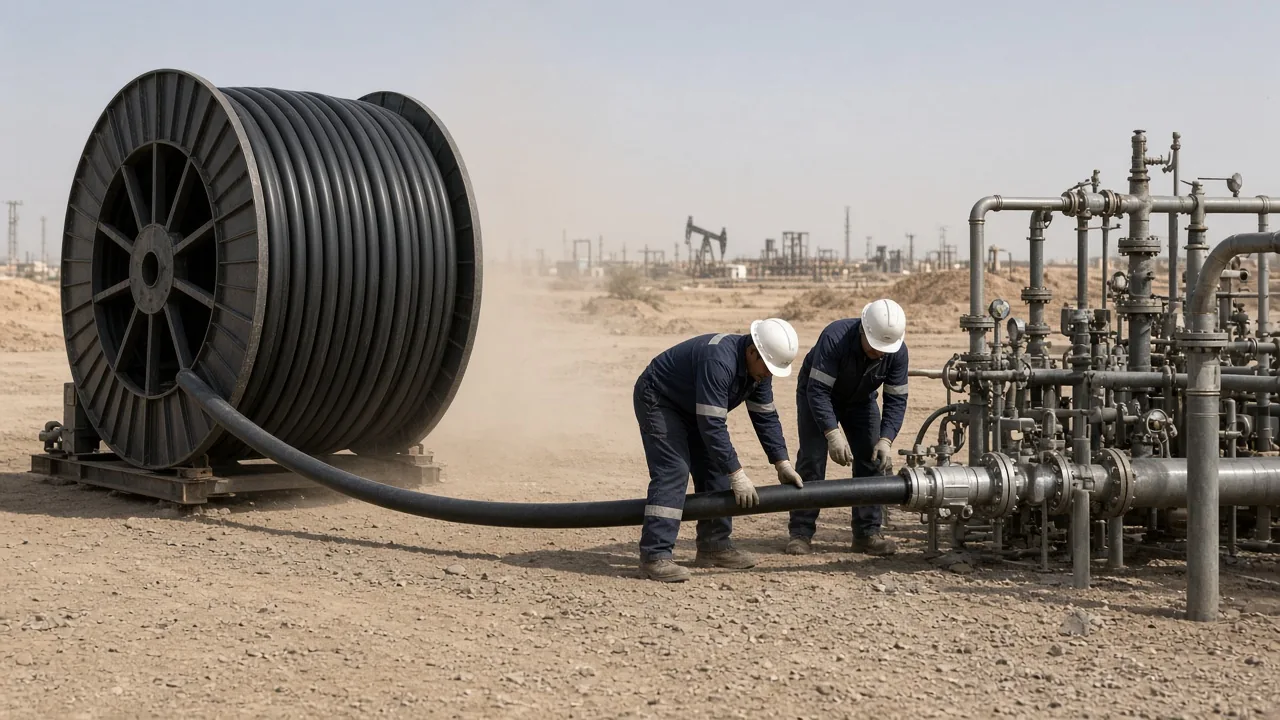
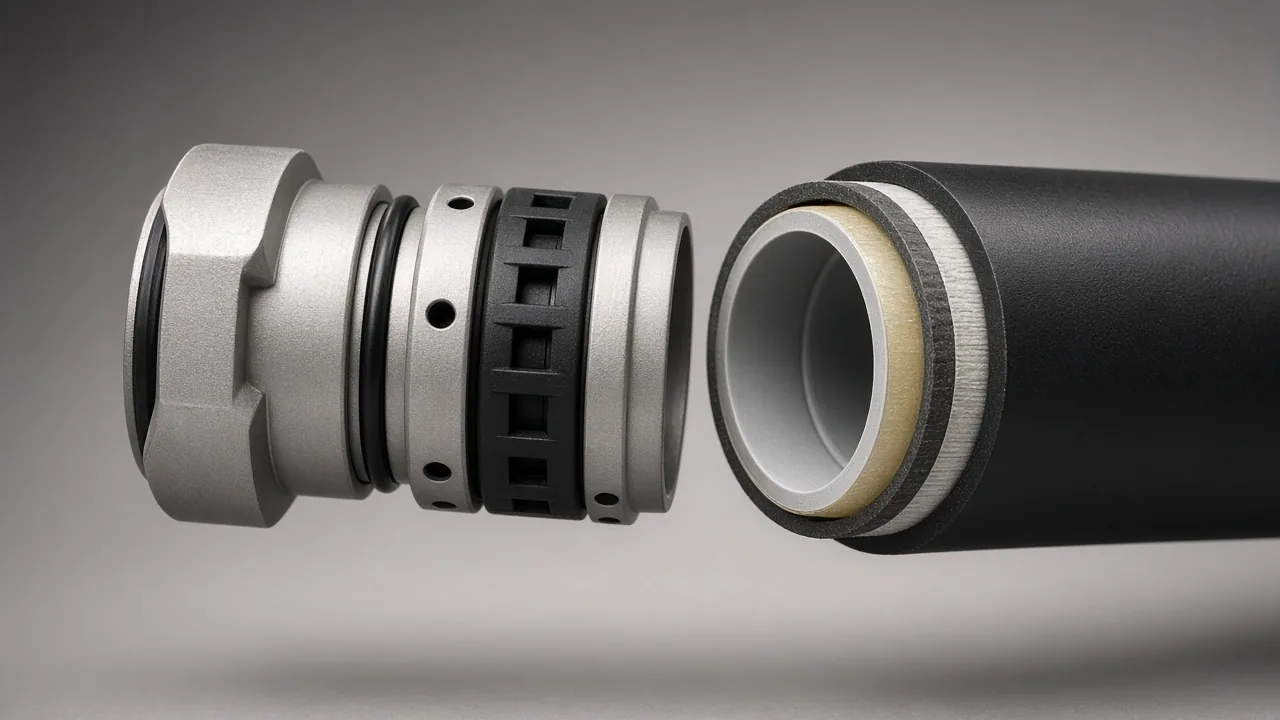
Spec and qualification buyers actually ask for
Before price, a serious Iraq (or Iraq-analogue) RFQ usually asks for:
- Standard reference: API Spec 15S (not 15HR/15LR unless the product is GRE).
- Design envelope: design pressure, design temperature, ID/OD or pressure class as published, and service life assumptions.
- Fluid: oil / gas / water / multiphase; H₂S, CO₂, salinity, aromatics; any chemical injection.
- Joints: coupler type, make-up method, pressure test of joints, spare kit policy.
- Reeling / installation: minimum bend radius, max pull, burial vs surface, protection, and installer competency assumptions.
- QA pack: manufacturing ITP outline, traceability, hydrostatic / factory tests as applicable, material certificates for the construction offered.
- Site constraints: desert temperature swing, UV/cover, traffic loads, third-party inspection expectations.
If those fields are blank, vendors cannot compare RTP systems apples-to-apples — and steel bids will look “cheaper” until install and integrity are counted.
When GRE (15HR / 15LR) vs RTP (15S)
| Question | Lean RTP (15S) | Lean GRE (15HR / 15LR) |
|---|---|---|
| Need long continuous lengths / spoolable install? | Often yes | Usually jointed sticks |
| Route needs many short rigid spool pieces / special fittings geometry? | Check bend radius & joints | Often stronger fit |
| Downhole / tubular GRE conversation? | Usually no — different product family | Yes (HR/LR as specified) |
| Buyer wrote “API 15” with no letter? | Stop — clarify 15S vs 15HR/15LR | Stop — clarify |
Both paths are non-metallic and corrosion-focused. The wrong letter in “API 15x” is a scope error, not a branding preference.
IFGS angle (Dongying manufacturer)
IFGS builds GRE / FRP / RTP oilfield equipment in Dongying. We do not claim a USA factory. Use this article to lock language (15S vs 15HR/15LR) and RFQ fields, then:
- Talk to engineering: Contact us
- Or start with the assistant: IFGS AI
Bring fluid data, pressure/temperature, route length, and joint preferences. We will not invent listing marks or project references you did not ask us to document.
FAQ
Is “API 15 RTP” the same as API 15HR? No. Spoolable RTP systems are discussed under API Spec 15S. 15HR / 15LR are GRE fiberglass tubular specifications.
Does RTP replace steel everywhere in Iraq? No. Steel, lined steel, GRE, and RTP each have envelopes. RTP is strongest where corrosion + spoolable logistics align with the design data.
Can you publish a list of IFGS Iraq installations here? Not in this article. Named wins require documented project permission. Ask via contact if you need a controlled reference process.
What should we send for a first quote? Fluid analysis summary, design P/T, length and route sketch, burial/surface, preferred joint family, and whether the tender text says 15S or only “API 15 / RTP.”
Next step
Clarify API Spec 15S in the RFQ, fill the design envelope, and request a technical review — or start on IFGS AI.
—
Pack for ifgs.com auto-publish. Images: ChatGPT (01–04). No invented Iraq project wins. No fake API marks. Manufacturer: Dongying only.