# UL 58 vs UL 1316 vs UL 1746
Buyers searching UL 58 PDF, UL 1316 online, or UL 1746 epub usually need something the SERP does not give: a clear map of which standard belongs to which tank problem, and which fields to put in a quote. This guide compares the three scopes in buyer language. It does not republish UL text, invent listing marks, or claim a factory outside Dongying, China.
IFGS manufactures GRE / FRP / RTP oilfield equipment in Dongying. Use this page to choose the right conversation — then confirm listing, construction options, and inspection requirements with the current UL document and your project specification.
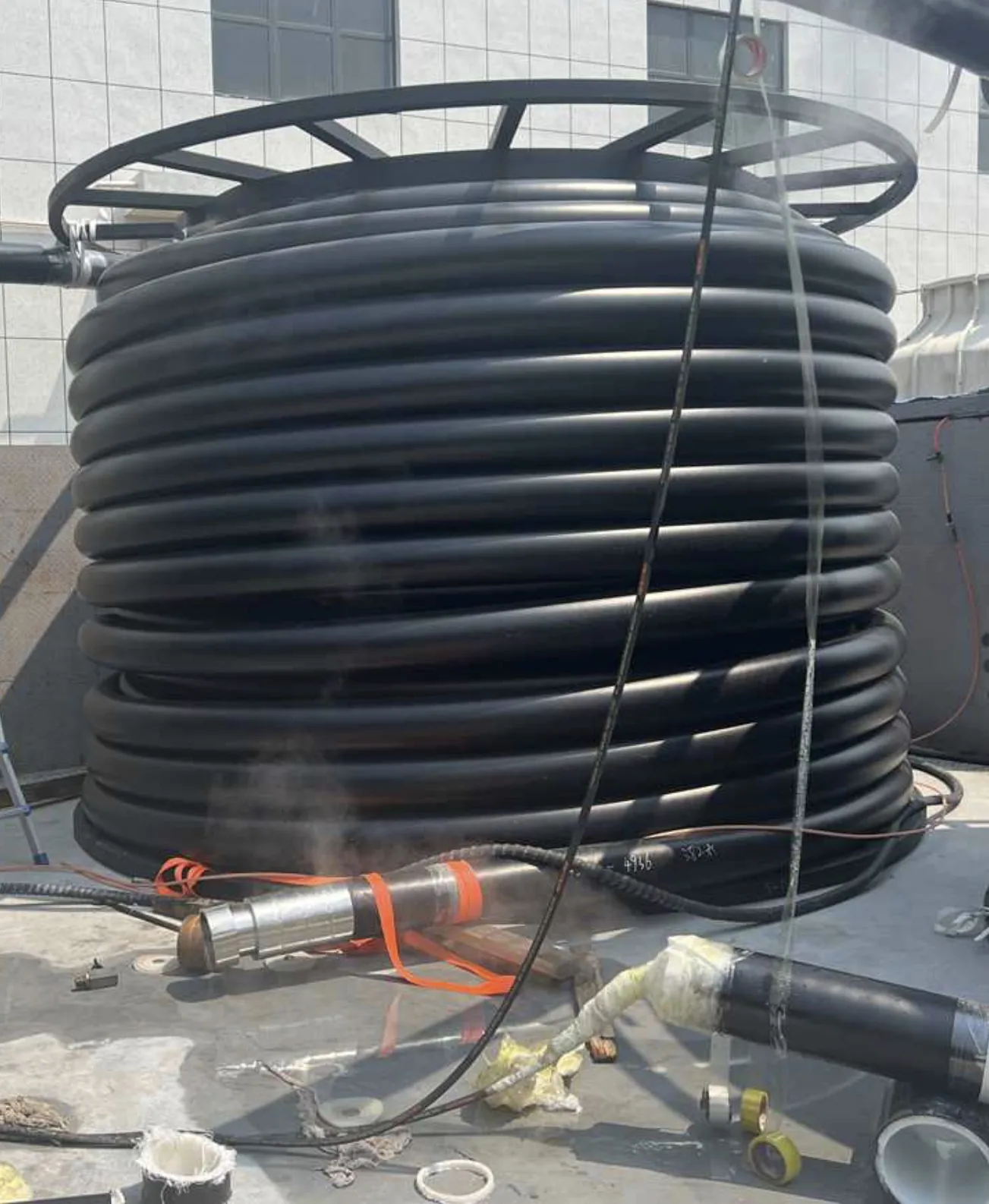
What PDF / online / epub searches miss
A PDF download answers “what does the document say.” Procurement still has to answer:
- Which object am I buying? Steel UST, fiberglass UST, or a corrosion-protection system on steel.
- Is the product path catalog or drawing? Diameter, capacity, openings, and coatings are project data.
- What must be listed / inspected / monitored after install? Standards and site codes are not the same step.
- What connects to the tank? Nonmetallic line pipe and transfer systems are a related but separate conversation (see FRP / GRE / RTP qualification on IFGS pages — not a substitute for tank listing).
UL 58 — steel underground tanks
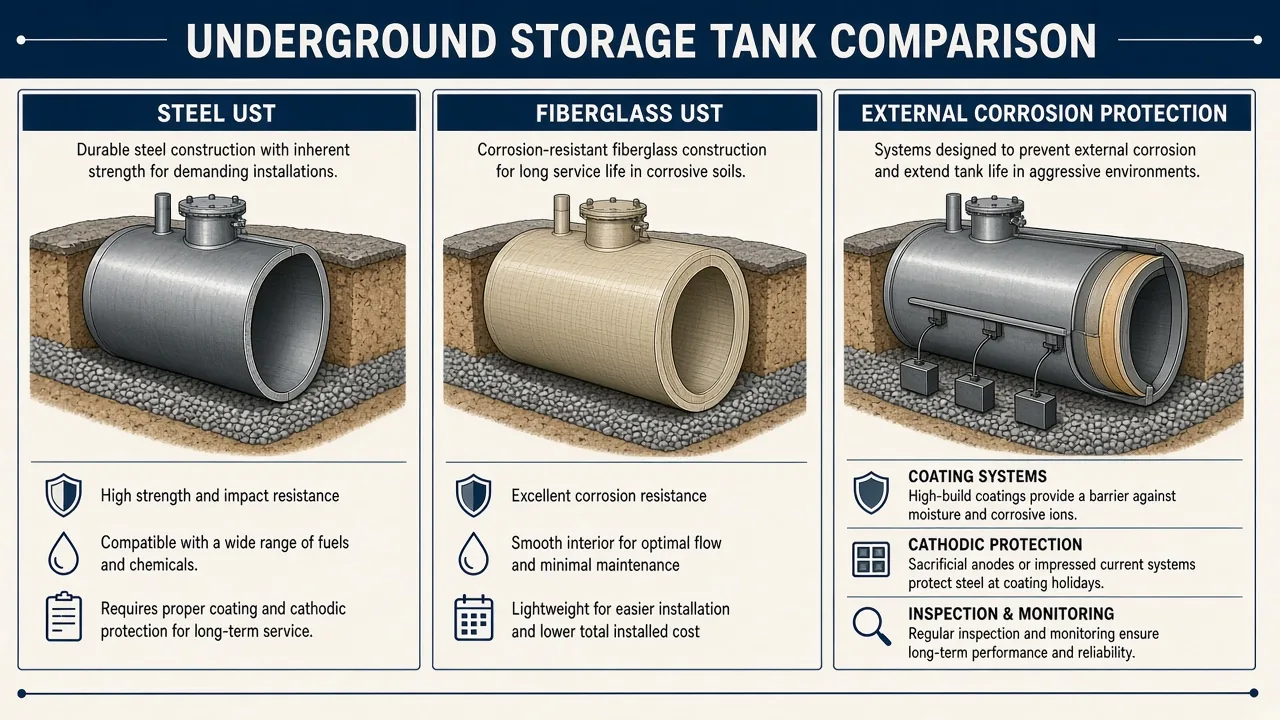
UL 58 is the buyer shorthand for steel underground tanks used for flammable and combustible liquids. In RFQ language it usually means: horizontal steel UST construction, atmospheric service, underground installation context, and the factory tests that belong to that construction path.
When it comes up
- Owner or EPC specifications call out steel USTs.
- Project prefers steel for impact / structural reasons and will manage corrosion separately.
- You are comparing steel vs fiberglass for the same buried service.
What UL 58 is not
- It is not a fiberglass tank standard.
- It is not automatically a complete corrosion-protection package (that is where UL 1746 conversations start).
- It is not a field piping standard.
UL 1316 — fiberglass underground petroleum tanks
UL 1316 is the common reference for fiberglass (FRP) underground petroleum tanks. Buyers land here when corrosion resistance in soil, installed weight, or an owner nonmetallic tank policy drives selection.
When it comes up
- Soil chemistry or long-term external corrosion risk makes coated steel expensive to own.
- Logistics favor a lighter tank for crane and pad constraints.
- The project already standardizes on fiberglass USTs for petroleum service.
What UL 1316 is not
- It is not UL 58 with a different resin name.
- It does not replace your project’s capacity, compartment, and opening schedule.
- It does not by itself qualify GRE / FRP line pipe systems — those are a separate product family.
UL 1746 — external corrosion protection systems
UL 1746 addresses external corrosion protection systems for steel underground tanks — coatings, jackets, cathodic protection concepts, and the monitoring / inspection logic that keeps steel alive in aggressive soils.
When it comes up
- The tank shell is steel (UL 58 family) and the soil / groundwater makes bare steel unacceptable.
- Owner specs require a defined external protection system, not a generic “coated tank” sentence.
- You need to separate tank construction from how the exterior is protected and verified.
What UL 1746 is not
- It is not a fiberglass tank standard.
- It is not a substitute for writing design pressure / temperature tables into a blog post.
- It does not remove the need for site-specific monitoring after installation.
Comparison table
| Topic | UL 58 | UL 1316 | UL 1746 |
|---|---|---|---|
| Primary object | Steel underground tank | Fiberglass underground petroleum tank | External corrosion protection for steel USTs |
| Typical buyer trigger | Steel UST RFQ / structural preference | Corrosion resistance / lighter install | Protect steel shell in aggressive soils |
| Material focus | Steel construction | FRP / fiberglass construction | Coatings, jackets, cathodic concepts |
| Common mistake | Treating UL 58 as “already corrosion-proof” | Mixing tank listing with line-pipe specs | Asking for UL 1746 without a steel tank path |
| Honest next step | Confirm construction + openings + install depth | Confirm capacity + compartments + petroleum service | Confirm protection system + monitoring |
How IFGS fits (honest scope)
IFGS is a Dongying, China manufacturer of GRE / FRP / RTP products for oilfield and energy service. We help buyers who need nonmetallic pipe and related equipment — and we will not invent a USA factory, a fake UL mark, or a listing claim that is not on the product path.
If your project mixes underground tanks with nonmetallic transfer / gathering pipe, keep the scopes separate in the RFQ:
- Tank standard family: UL 58 / 1316 / 1746 as applicable.
- Pipe / spool / joint path: GRE, FRP, or RTP with the real construction data.
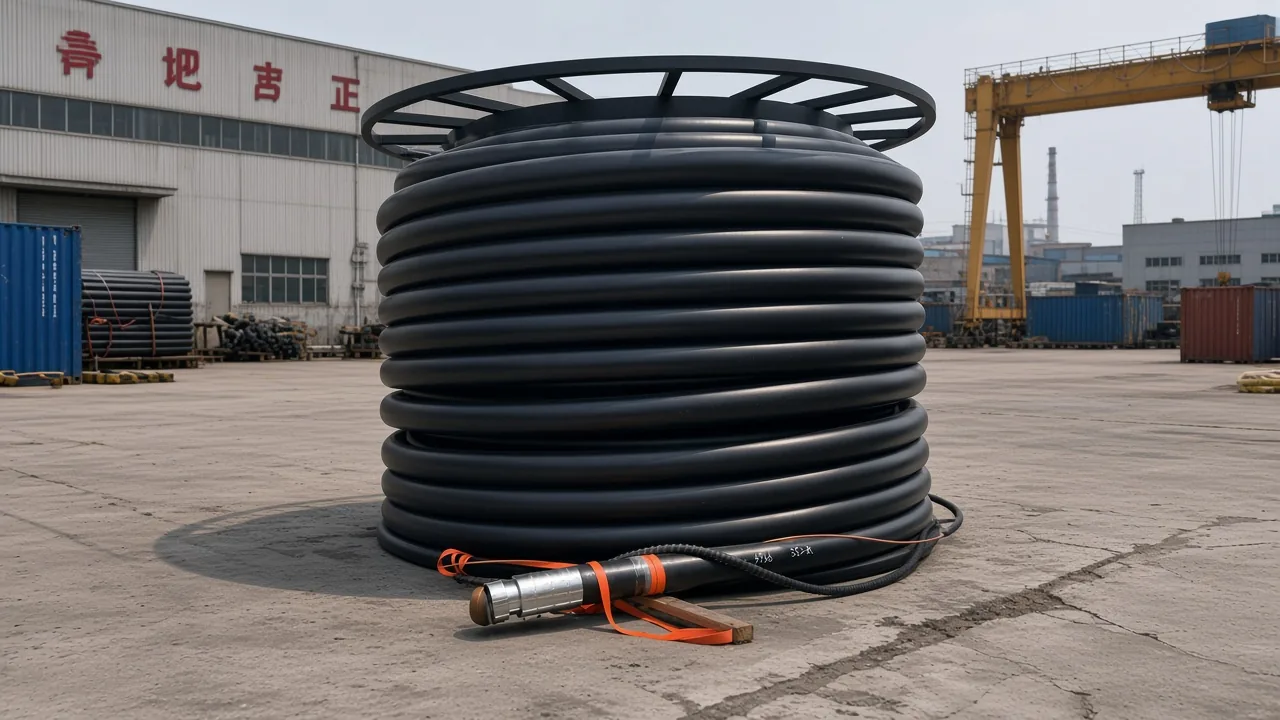
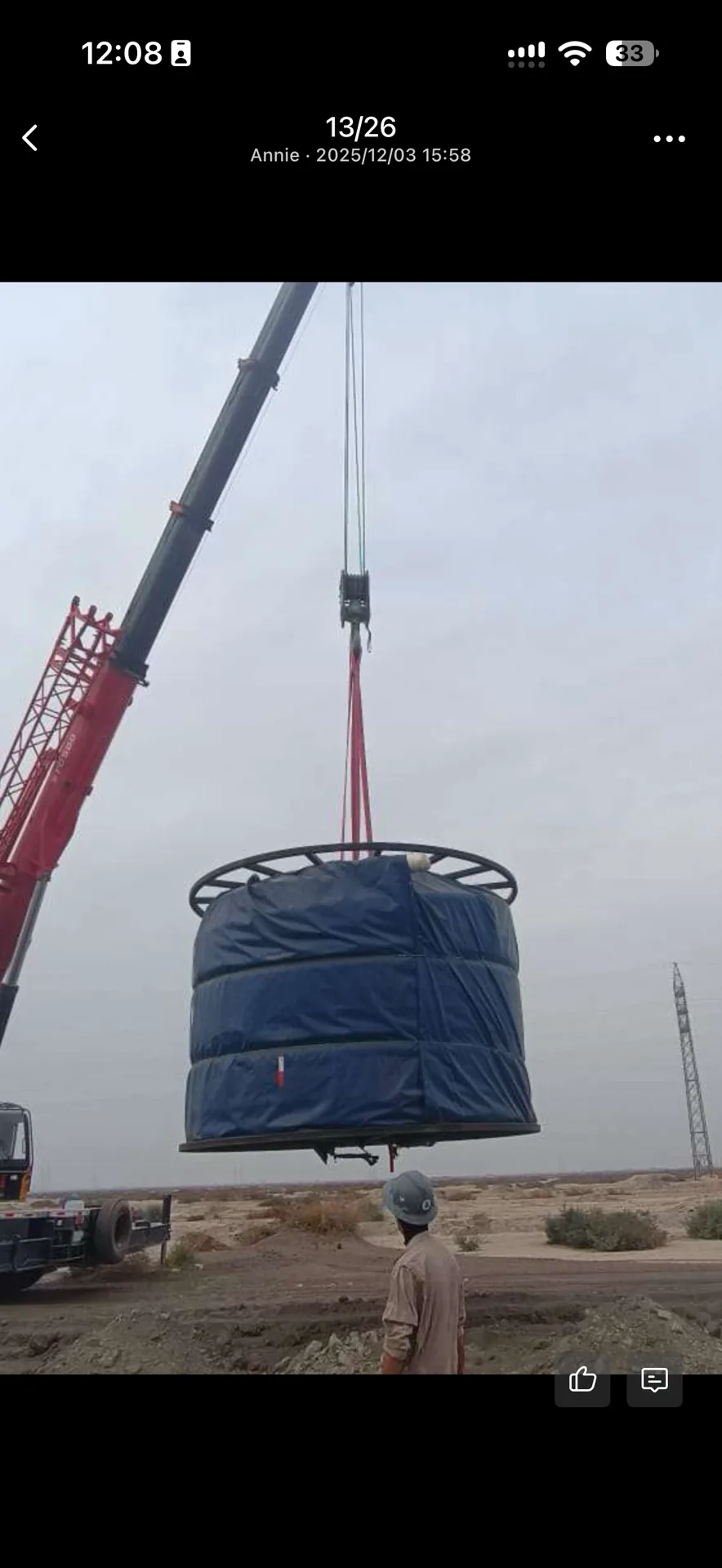
Field photos of pipe reels and protected tank lifts are logistics reality — not a certificate.
RFQ checklist (minimum)
- Tank type: steel UST, fiberglass UST, or steel + external protection system.
- Capacity, compartments, openings, and burial context.
- Medium / petroleum service notes your project requires.
- Site soil / corrosion assumptions (especially if UL 1746 is in play).
- Documentation / inspection expectations after install.
- Related nonmetallic pipe needs (diameter, length, joints) — separate line items.
FAQ
Can I decide from a UL PDF alone? No. The PDF is the framework. Your RFQ still needs capacity, service, and installation data.
Is UL 1316 “better” than UL 58? Neither is universally better. Steel and fiberglass solve different constraints. Compare against the site and the owner spec.
Does UL 1746 replace UL 58? No. UL 1746 is about protecting steel. You still need a coherent steel tank construction path.
Do you publish UL listing artwork on this page? No. We do not place fake UL logos or invented certificates in marketing art.
Next step
Talk through tank-adjacent nonmetallic pipe and FRP qualification with IFGS, then send the project fields.
Related reading on ifgs.com: What is UL 58, What is UL 1316, What is UL 1746 — confirm live slugs before publish.